Vol. XVIII · Free shipping $75+ · Read the collection
Feature · Product Review
hypothesis glutathione persister cells

hypothesis glutathione persister cells Identification and genetic dissection of convergent cell states Role of Glutathione in Cancer: – Targeting PPP1R15B and ATF4 axis

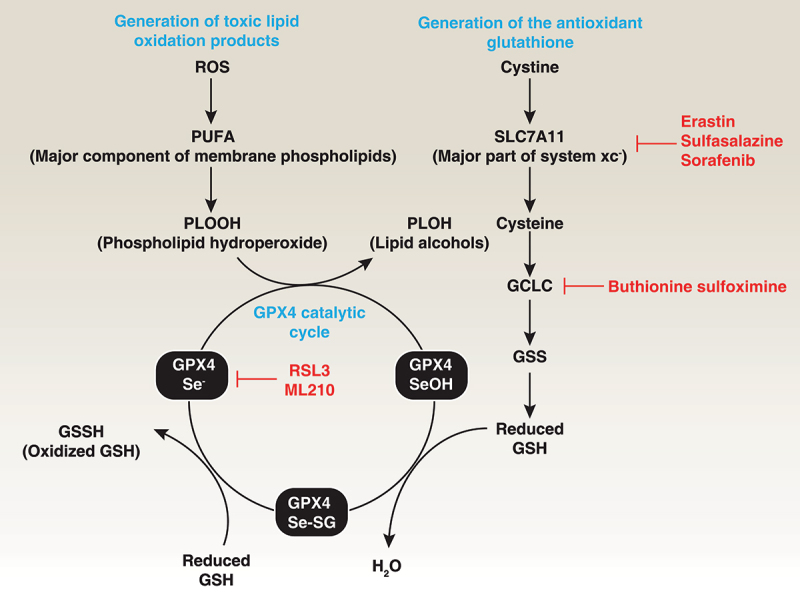
Targeting PPP1R15B and ATF4 axis in hepatocellular carcinoma: A novel strategy for overcoming lenvatinib tolerant persister cells through GPX4 mediated ferroptosis induction ScienceDirect A Genome wide Haploid Genetic Screen Identifies Regulators of Glutathione Abundance and Ferroptosis Sensitivity ScienceDirect GPX4 in cell death, autophagy, and disease PMC Drug tolerant persister cells in head and neck squamous cell carcinoma: Molecular mechanisms and therapeutic opportunities ScienceDirect Persister cancer cells: Iron addiction and vulnerability to ferroptosis: Molecular Cell

SKU: 17425394791 · From lagence-mr.com

4.6
USD21.09 USD55.09

Pay in 4 interest-free payments of $5.27 Learn more

Shipping Estimate
USA
  • USA
  • CAN

Ships within 48 hours · Estimated delivery Aug 3 - Aug 8

Description

In contrast, ncRNA circ-Sirt1 directly binds to NF-B and inhibits its translocation (85)

hypothesis glutathione persister cells Identification and genetic dissection of convergent cell states Role of Glutathione in Cancer:  Targeting PPP1R15B and ATF4 axis

Notably, additional studies should address tumor heterogeneity, complex interactions within the TME, and mechanisms of therapeutic resistance

hypothesis glutathione persister cells Identification and genetic dissection of convergent cell states Role of Glutathione in Cancer:  Targeting PPP1R15B and ATF4 axis

Here we tested whether NMDAR activation have a similar effect in neurons derived from human embryonic stem cells (ESCs

hypothesis glutathione persister cells Identification and genetic dissection of convergent cell states Role of Glutathione in Cancer:  Targeting PPP1R15B and ATF4 axis

10.1111/bph.14446 48

hypothesis glutathione persister cells Identification and genetic dissection of convergent cell states Role of Glutathione in Cancer:  Targeting PPP1R15B and ATF4 axis

The xenobiotic adaptation in arthropods evolves through multiple mechanisms (Figure 1) [13, 14], including reduced penetration through the cuticle, behavioral avoidance [15, 16], microbiome-mediated detoxification [17-20], enhanced metabolic detoxification [21-25], enhanced sequestration or excretion [13, 19, 26, 27], and target site insensitivity [28-32]

hypothesis glutathione persister cells Identification and genetic dissection of convergent cell states Role of Glutathione in Cancer:  Targeting PPP1R15B and ATF4 axis
Exchange/Return Notes
  • We offer a 30-day return/exchange service after receiving.
  • Final sale items are not eligible for returns or exchanges.
  • To process your return/exchange, please contact us at [email protected]
  • Please click here for more details>>> Return & Exchange Policy

You may also like

recommand products